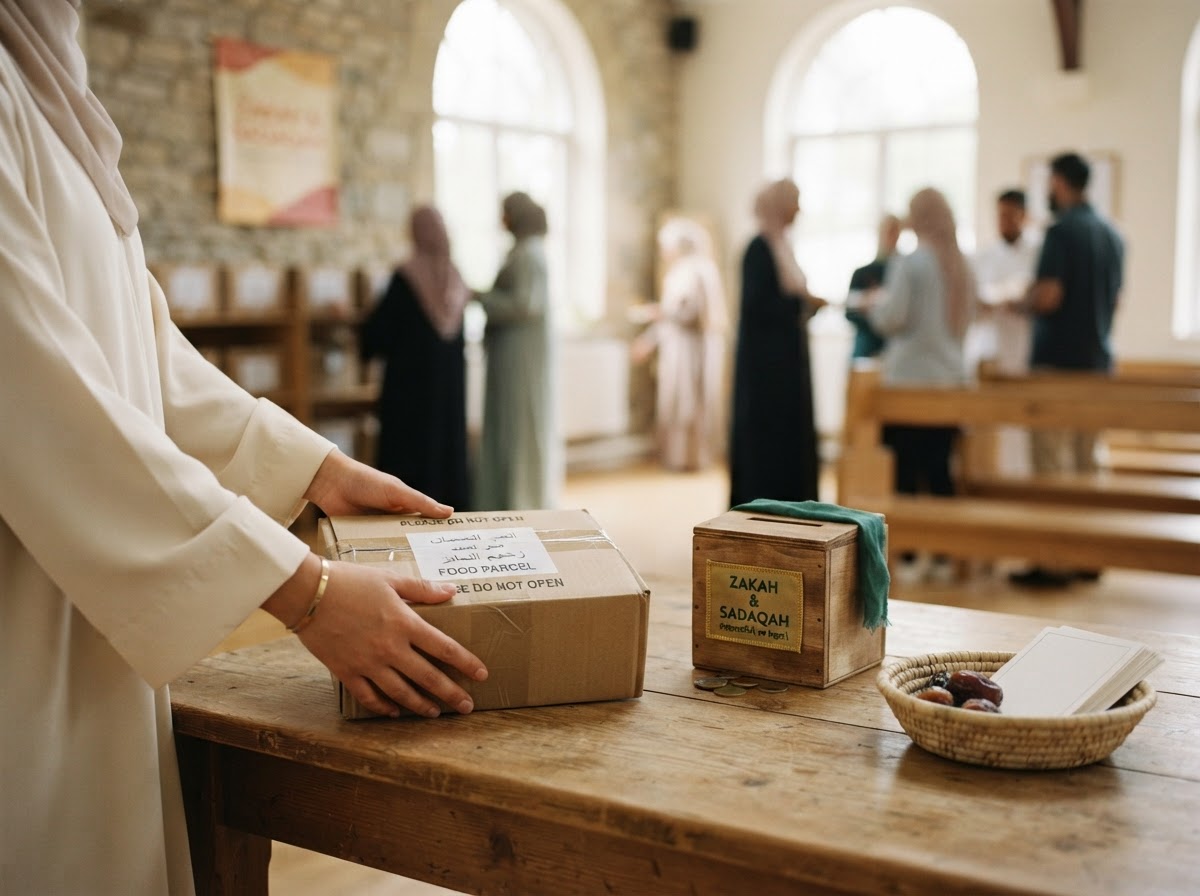

Zakah is an act of worship and a right within wealth. It turns belief into action: a Muslim fulfils Allah’s command, cares for people in need and remembers that wealth is a trust to be used responsibly.
Zakah reminds us that what we own is a blessing from Allah. Giving the Zakah that is due helps purify our wealth, softens the heart and directs support towards people who are entitled to receive it.
Allah repeatedly joins the command to establish prayer with the command to give Zakah. This shows that Zakah is not simply a kind gesture; it is an important part of a Muslim’s relationship with Allah and a responsibility towards others.
خُذْ مِنْ أَمْوَالِهِمْ صَدَقَةً تُطَهِّرُهُمْ وَتُزَكِّيهِم بِهَا
“Take from their wealth a charity by which you purify them and cause them to grow.”
Quran, At-Tawbah 9:103 (meaning of the verse)
Giving what is due helps loosen the hold of greed and reminds us to be grateful for what Allah has provided.
Zakah carries support to eligible people and helps meet real needs with dignity and compassion.
When Zakah is given and distributed responsibly, it strengthens mutual care and shared responsibility.
Zakah trains us to see wealth as a trust from Allah, rather than something to keep for ourselves alone.
The Prophet Muhammad ﷺ instructed that Zakah be taken from the wealthy and given to the poor. This Prophetic teaching highlights its practical purpose: wealth should reach eligible people and support the wellbeing of the community. (Sahih al-Bukhari 1395)
Because Zakah is an obligation with specific rules, take care to calculate it accurately and direct it to eligible recipients. The details can depend on the type of wealth, the time it has been held and the circumstances of the recipient.
□ I have reviewed the wealth that may be subject to Zakah.
□ I have checked the current threshold and the date my Zakah is due.
□ I have calculated the amount carefully and made my intention.
□ I have chosen an eligible recipient or a trustworthy distribution route.
Before giving, pause to remember where your wealth came from and Who entrusted it to you. Ask Allah to accept your Zakah, to place blessing in what remains and to make your giving a source of relief for someone else.
O Allah, accept my Zakah, purify my heart, place blessing in my wealth and make this giving a means of relief and goodness for those in need. Help me fulfil this duty sincerely and responsibly. Amin.
Takeaway: Zakah is worship, purification and care in action. It reminds us that our wealth is a trust from Allah and that the needs of others are part of our responsibility.
This article offers general educational guidance. Zakah calculations and rulings can vary with individual circumstances; seek qualified scholarly advice where needed.
© 2026 MadrasatunNur Educational Trust. All Rights Reserved.