
Fasting (Sawm)Shield & Spiritual Awakening
Sawm is more than abstaining from food and drink. It is a spiritual discipline that cultivates taqwā (God-consciousness), patience, compassion and gratitude.
Explore Sawm by Topic
Choose an illustrated learning pathway to explore the spiritual and practical dimensions of Islamic fasting.
 Fasting & Spiritual ReflectionUnderstand the purpose of Sawm and build a thoughtful relationship with Allah.Explore resource →
 Ramadhan LearningExplore articles on the virtues and practices of the blessed month.Explore resource →
 Fasting GuidanceReview practical Islamic rulings and essential fasting guidance.Explore resource →
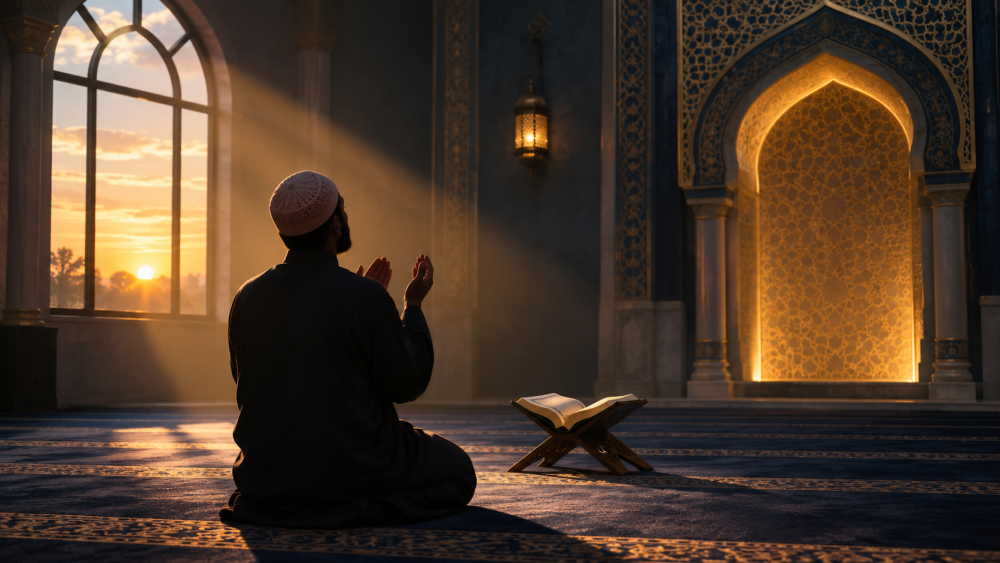 Duʿās & RemembranceDiscover Prophetic words for Iftar and moments of patience.Explore resource →
The Wisdom Behind Sawm
Fasting shapes both our worship and our character, inviting us to reflect on how we live each day.
Taqwā — God-consciousness
Fasting trains us to remain mindful of Allah even when no one else can see our choices.
Read Article →Empathy & charity
Experiencing hunger can remind us of the needs of others and encourage generosity.
Read Article →Patience & self-restraint
Sawm encourages control over anger, harmful speech and destructive habits.
Read Article →Gratitude & reflection
The fast invites appreciation for everyday blessings, renewed intention and sincere worship.
Read Article →When Muslims Fast
Alongside the obligatory fast of Ramadhan, Muslims may observe voluntary fasts throughout the year.
The Month of Ramadhan
Fasting the lunar month of Ramadhan is obligatory for Muslims who meet the conditions of religious responsibility, subject to recognised exemptions.
Mondays & Thursdays
The Prophet ﷺ encouraged voluntary fasting on these days, which provide regular opportunities for worship.
The White Days
The 13th, 14th and 15th of each Islamic lunar month are recommended days for voluntary fasting, excluding days when fasting is prohibited.
For further seasonal guidance, visit our Ramadhan and Fasting articles.
Duʿās and Reminders for Fasting
Meaningful words to reflect on during the fast and when breaking it.
ذَهَبَ الظَّمَأُ، وَابْتَلَّتِ الْعُرُوقُ، وَثَبَتَ الْأَجْرُ إِنْ شَاءَ اللَّهُ
Dhahabaẓ-ẓama’u, wabtallatil-ʿurūq, wa thabatal-ajru in shā’ Allāh.
“The thirst has gone, the veins are moistened, and the reward is confirmed, if Allah wills.”
Reported in Sunan Abī Dāwūd.
Explore Our Sawm Resources
Continue learning about fasting, the beauty of Ramadhan and the importance of sincere worship.
Support Faith, Education and Community
Help MadrasatunNur share beneficial knowledge and strengthen community services.
Support Our CampaignsMay Allah accept our fasting, purify our intentions and increase us in taqwā. Āmīn.
Countdown to Ramadhan
Our countdown is to the expected first fasting day: Monday 8 February 2027, using UK time. The first Tarāwīḥ is expected on the evening of Sunday 7 February.
Calculating the time remaining…
Please note: The start of Ramadhan is provisional and subject to confirmation following the moon sighting. Follow announcements from your local mosque or Islamic authority. The timer counts down to midnight at the start of the expected first fasting day, not to a confirmed Maghrib or Fajr time.